


There’s a certain logic that has taken over the healing world, coming from a techno-solutionist approach to the world, life, and humanity. Many healers and spiritual practitioners without a strong link to a tradition or lineage system have unwittingly adopted this mindset. And some systems have this idea at their core.
This approach is simple, and it might appear obvious and completely normal to most of you. That’s because this way of thinking has been coopted in many spheres of life. It’s not normal, however, and it’s not neutral. It’s also not a sacred approach to healing.
According to this view, the world can be analysed according to certain criteria, and when it doesn’t meet those criteria, we can declare that we have a “problem”. Who created those criteria and where do they come from? Did we have a say in deciding the norms and boundaries of what can be “problem” and “not problem”? Not many of us think about that.
Once we have labelled something “problem”, we can then automatically move to another stage. This stage is called “fixing” or “solution”. When we called something “problem”, we attached the connotations of bad, negative, uncomfortable, dysfunctional, sticky, icky and just not nice. And because of that, we now need to (why?) remove those “bad” ideas and feelings by changing them to good ones, and that involves finding a solution to this problem.
What is a solution? A solution can also be called a treatment, a healing, a fix, a remedy – many other things. It’s something that we apply to the problem by intervening in a situation, to change the way it is. Some solutions change the whole situation, context, and environment around it in order to completely eradicate what was declared “problem”. Others are more selective; they modify the state of affairs through intervening locally – energetically or physically – in order to try to repair a small part of something.
Take the example of someone having low energy, fatigue, depressed moods, and feeling generally flat. The light inside seems weak. Those are the symptoms of something, and depending on the framework, a different analysis of the problem will be found. Most people will take that as a “negative problem,” and apply whatever methodology they have, intervening in the patient’s body or energy field, in order to “fix” that.
The healer or practitioner decides what state the patient should be in, decides what is “wrong” with the patient, and decides what to apply in order to solve it. In the case of energy healing, the practitioner will decide what energic state they think the client should have, and then attempt to bring that about. Most of the time, the practitioner believes the client should be in a state of love, peace and happiness. So, they intervene to force the client’s system to bring that about.
The film Mauri provides an in-depth exploration of a traditional ma0ori healing praction, called rongoā. Rongoā is the Māori approach to bringing balance to the energetic world. In this healing framework. the role of the healer is different. The basis of rongoā is one of right relation and balanced action. According to Donna Kerridge, practitioner of rongoā, the purpose of rongoā is “whakamana – lifting the life essence and the dignity of the world and of us as we live in and are part of a greater family.” Whilst the practitioner must first determine where the problem lies, they do not continue in the techno-solutionist fashion we described by prescribing an energetic solution.
The goal of their traditional healing practice is not fixing sore knees, depressed moods, and liver problems. It’s about lifting up the overall resonance of the person and their family, community, and environment. And how do they do that? Not by deciding what needs to be changed, altered and fixed, but by deeply listening and allowing the life force of the person and their connections and relations to build back up, by itself. Atarangi Murupaenga, also a practitioner, notes that the practice acts on the person in such a “way that can self-healing can come back.” The practitioner allows the body to remember how to heal itself, instead of deciding how to fix something through intervention. Rongoā still asks the practitioner to discern where disharmony sits. What differs from the techno-solutionist model isn’t the listening itself, but the refusal to force what comes next.
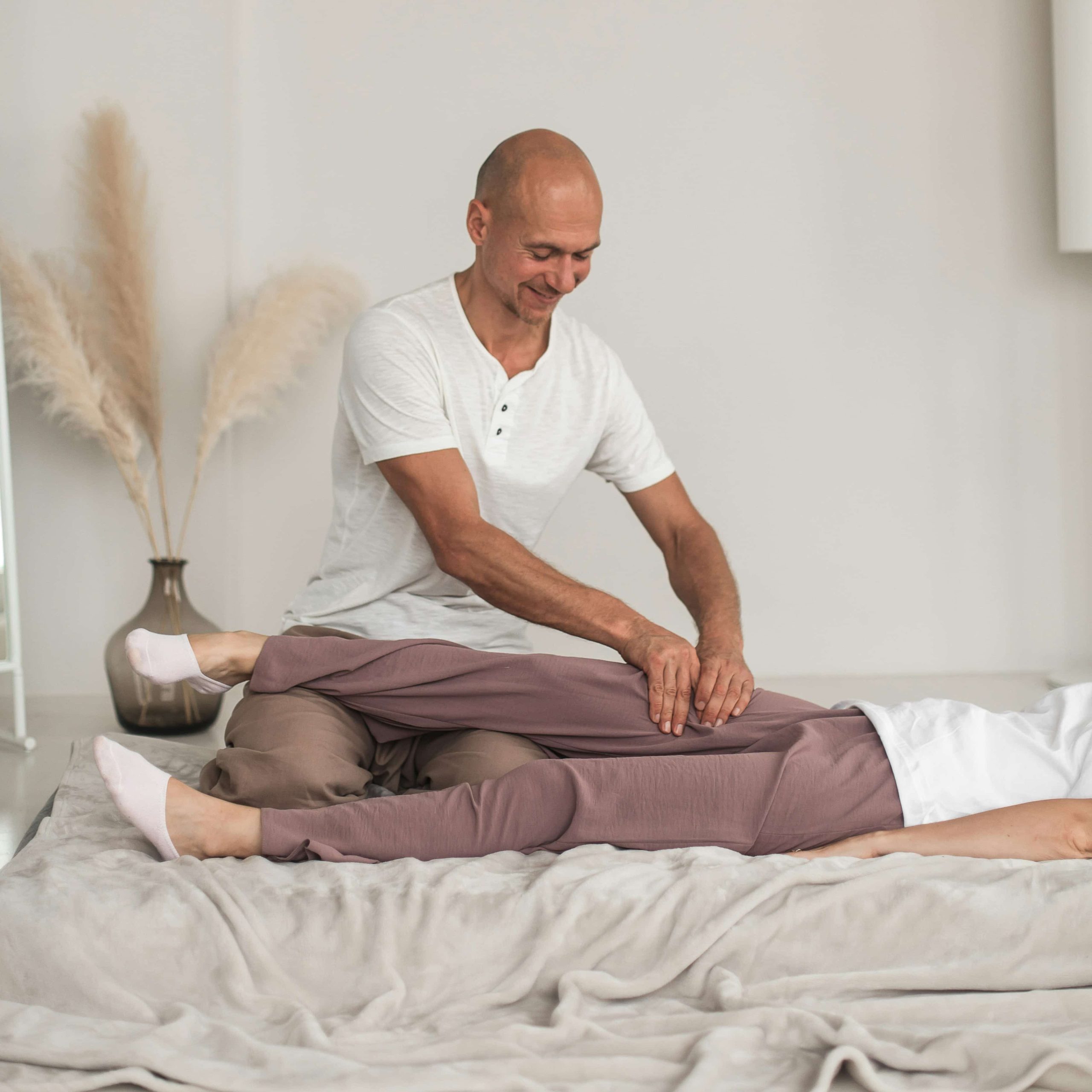
Rongoā also has a physical aspect, of course, where plants, massage treatments, and other physical treatments can be applied to ease a person’s pain if they are experiencing a physical injury. Just as treatment in a hospital with modern medicine can save lives, because of this problem-solution logic. It’s not the logic itself that’s the problem; it’s the context in which we use these patterns.
In some cases, it might not be the right time for the person to heal. They may not have learned, integrated, or confronted enough of themselves for their symptoms to be healed. As in many indigenous systems, we are not entitled to be healed. We are not entitled to have our “problems” go away. Everything in the person’s system is a complex combination of bio-energetic patterns and experiences, which do not follow the problem-solution logic.
Tohe Ashby, also a practitioner of rongoā, notes that in feeling the client’s energy through deep listening, he can determine whether it’s a physical or a spiritual concern. If it’s spiritual, the disturbance will be located above the jawline. Physical, social or land-based disharmonies occur below the jawline. It’s important to understand that here, listening is not just with your ears. It’s the breeze on your face, it’s the conversation happening in your mind, the feelings you have, all whilst in a context and a relationship.
Let’s look at another spiritual and energetic practice, in a different context with a different goal, but is another living example of non-interventionist energetic work. Giving Shaktipat diksha to spiritual aspirants on the yogic path is very much like rongoā Māori healing. The yogi who gives it does not in any way interfere with the process through deciding that the aspirant has some kind of negative symptoms, behaviours, or conditions. After all, Shaivite teachings are clear in the idea that reality is divine just as it is, and there is therefore no need to “help” others out of ego or through action outside of what comes naturally through the flow of Shakti. This yogi simply holds his field of resonance, maintains the balance in the room or environment in which the people are in, and allows for the divine to work through him and give this grace to the aspirant.
He may touch certain parts of the body of the aspirant, in order to bring greater energy to these points, releasing blockages in the flow of energy in the body. Again, this is not through deciding intellectually that the person is blocked and needs fixing. Instead, he is guided intuitively to rest his hand in a certain position and simply allows for the energy of the aspirant to find its way. He does not decide the outcome of his touch.
Awakening and the path of yoga go through stages, parts of which resonate with the approach of rongoā. Yogis work with the energy inside of them – prana kundalini (the energetic forces we feel which create disbalances in the process of purification), which becomes cit-kundalini (the dissolution of subject/object, the experience of awareness itself) allowing the person to start resonating as a beacon of an amplified frequency, as Itzhak Bentov describes in Stalking the Wild Pendulum. They resonate at a frequency which triggers others to go through similar processes, thus sharing the light. This is exactly the same way Donna Kerridge explains mauri within the body: “People with a lot of mauri are like lights, with a candle burning bright inside, resonating at a higher frequency. Others want to be part of that, and by sharing their light, they bring others up.”
Just as with Māori healing, those on a path of kundalini awakening may not be “entitled” to have a particular kriya reduced or stopped. In many cases, these kriyas point to blockages of energy, and can sometimes be real learning points on the path of awakening, teaching lessons to the aspirant and allowing them to develop a true and integrated non-dual perspective on the world, before reaching more developed stages of the path. If the individual’s path has led to a certain kriya, it is not for no reason, and that kriya, whether it be sickness, pain, laughter or joy, is there to burst through energetic knots and allow the light to fully be reflected in the person’s consciousness.
We need not think that only spiritual or energetic modalities work in this way: there is also an example to be found in a unique branch of osteopathy. Biodynamic craniosacral therapy invites the practitioner to adopt a position of non-interference. Instead of actively interfering with the action and movement of the tides inside a person (tides are their way of referring to the natural fluctuations of energy in the body), a therapist is supposed to be with, to witness, and to allow these rhythms to move back into a harmonious movement. They identify where there is movement and where there is blockage or stagnation, and then are guided to places where they put their attention to allow the energy to move again in these areas.
No decision is made regarding “fixing” a person, nor regarding the way in which the energy is supposed to flow within the body, as this would amount to energetic violations. In Stillness: Biodynamic Cranial Practice and the Evolution of Consciousness, Charles Ridley discusses this approach to the practice. He promotes letting “stillness” do the organising (of disorganised energy), not the practitioner themselves. In reality, this technique is very similar to the approach of rongoā, although the descriptions of what the problem is may be culturally different, depending on the context.
Rongoā, shaktipat, and biodynamic craniosacral work all ask the practitioner to hold a different kind of skill. Years of experience go into learning how to listen closely, how to feel where a person’s energy has pooled or stagnated, how to stay present without reaching for a result. The healer does not decide what the person should become. The person’s own life force decides, the way a river decides its own course around a stone, the way a seed decides when the ground has warmed enough to open.
This asks something of the practitioner that looks, from the outside, like doing less. It’s not a good sales approach, but it’s a very effective therapeutic position. Staying present while someone else’s process unfolds in its own time, without pulling it toward an outcome you have already chosen for them, takes steadiness. The practitioner, yogi or therapist becomes less a mechanic and more a kind of shoreline, something the tide can move against and trust to still be there.
There is a further layer underneath all three of these traditions. None of them promise anything to the one who comes seeking help. A person may not be ready. Something in them may still need to be lived, felt, or understood before their body or their energy can shift. Indigenous systems have long held this without apology, and it runs against everything the fixing model wants to believe about entitlement to relief. We are not owed the removal of our symptoms on our own timeline. We are owed, at most, a field held well enough that our own system can find its way back, whenever it is ready to. That’s the path of recognition, too: the guru holds the light steady, so that, when we are ready, we may realise the true nature of the self.
Care, in this light, is not the removal of what looks broken. It is the willingness to sit beside it, without an agenda for what it should become.