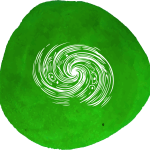
jagadānanda
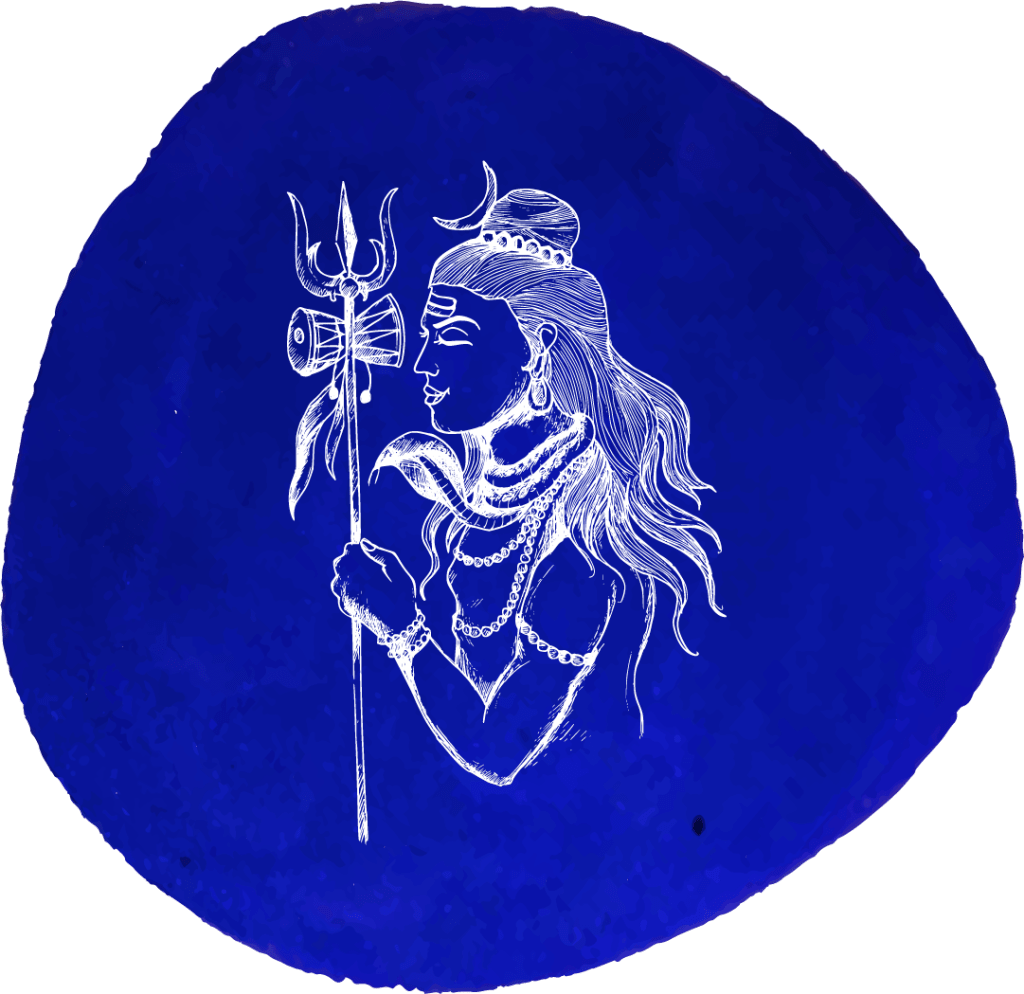
Discover authentic presence
Return to your natural self
Deepen your practice
True meditation brings us home to ourselves – it helps us find presence and stillness, a space from which we can recognise who we are, and re-integrate ourselves within the more-than-human worlds.
I teach non-dual meditation: establishing a container to enter a state of being where the separate sense of “me” dissolves, revealing the unity of all things.
Through practice, discipline, and inner motivation, meditative states become easier to find, one day realising that you fall into meditation whenever the occasion arises.
The goal of meditation is not less stress, more joy, or better relationships – these are its side effects. Here, we meditate to find out who we truly are.
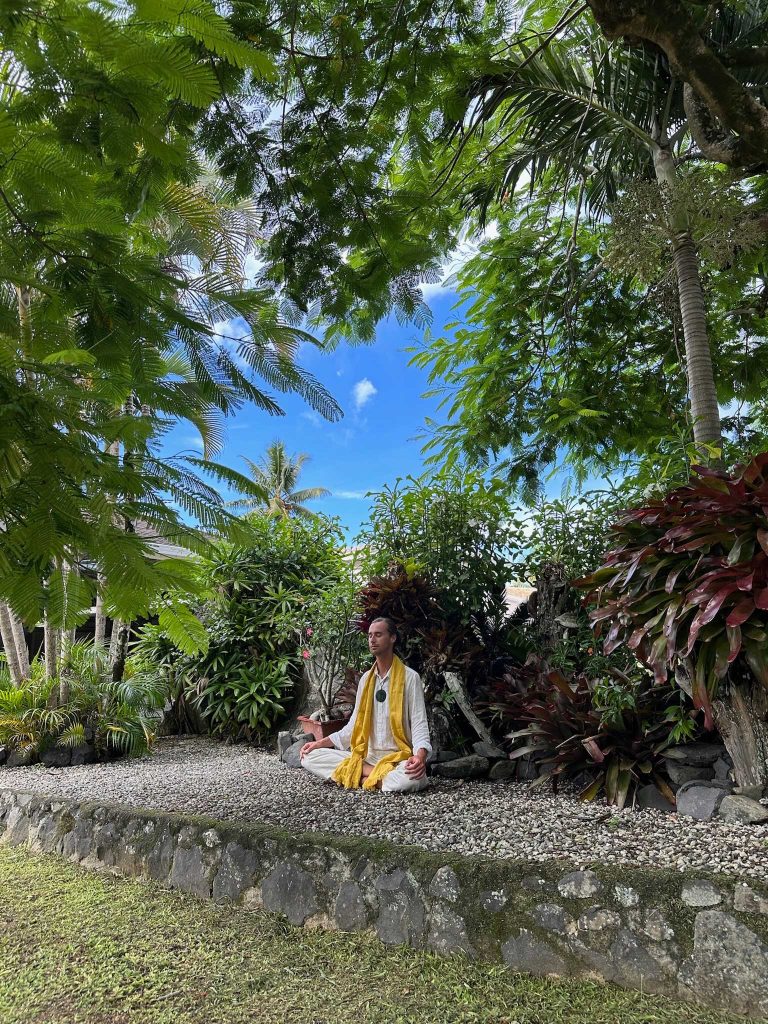
deepen your meditation practice in 30 days
4 90-minute individual sessions:
Session 1: Discovery
Deep dive into who you are: your goals, your motivations, your life, your habits, meditation experience. Establish who you are and why you’re here.
Session 2: Finding and recognising presence
Somatic practices to calm the nervous system, bring the awareness into the body, and prepare for meditative states.
Session 3: Meditate and make it regular
Meditate together and discuss how you’ve implemented my guidance, create a regular practice that’s right for you.
Session 4: Autonomy and integration
Reflect on your progress, return to your initial description of yourself, and set check-in moments in the future.
Do you find that your daily life is stressful? You know the benefits of meditation and are keen to make lasting peace and joy and a clear, calm mind a reality in your life. And you’ve tried the meditation apps, which don’t really work for you.
Deep meditation is possible, if you know how. I invite you on a journey into the heart, where you will learn how to meditate and ways to deepen that practice, whatever your starting point.
My teachings are trauma-aware, and rooted in traditional meditation approaches. I don’t believe in magic techniques, fancy apps or blanket-approaches. I share teachings that resonate and meet you where you’re at.
We’ll meet regularly throughout the 30-days, and you can message me anytime for pointers, tips and to have your questions answered.
towards graceful, authentic and grounded presence
Aligned with purpose, rooted in our lands, and illuminated by the creative energy of the universe, we may look forward with courage and grace, sure of our identity, and connected with all beings: this is my vision for the individuals of today and tomorrow.
Meditation is a way of experiencing the interconnection of all things. We can only experience this interdependence when we calm the mind, dissolve the ego, and return to bodily awareness.
Too far down and we are engrossed with material concerns like money, resources, body image, and judgements. But too far up and we become airy, floating, stuck in the imagination and unable to live the practical lives that this world requires.
I’ve seen both of these extremes. Meditation must not become an escape from our troubles, but the way through them. That’s why a careful balance is needed, led by an experienced guide to avoid the pitfalls and make the most of your practice.
Just like a hike in the bush, building a clay house, or catching and cooking a fish, once the wisdom and methods are integrated into the fabrics of our minds, bodies and souls, we become autonomous and can begin to explore in a safe and secure way.
The meditation practice becomes a doorway to greater alignment in our everyday lives. We cherish each opportunity to be alone, yet thoroughly implicated in the cosmic web of life. At the end of the road, all separation disappears, and what remains is life: pure presence, pure loving awareness.
Join me in this meditative adventure to discover your true nature, heal old wounds, find joy and peace in every moment, and contribute your gifts to the unfolding of tomorrow.
My journey with meditation…
From birth, I grew up in environments where meditation and the connection to that which is greater than us were valued and important experiences.
My grandfather spent the later part of his working life teaching meditation around the world – visiting communities to help people realise that the connection they sought lay within. Along with that, my mother and aunt worked as spiritual mediums in Aotearoa NZ, Australia, and the UK.
I have been on my own discovery journey since, and I don’t teach from these same frameworks. I’ve meditated in temples in Japan, in churches in Europe, and in the wild reaches of nature around the world. I’ve also been initiated into Siddha Yoga.
Throughout, the basic principles of quieting the mind and turning within have stayed with me and continue to be shared through my work and practice.
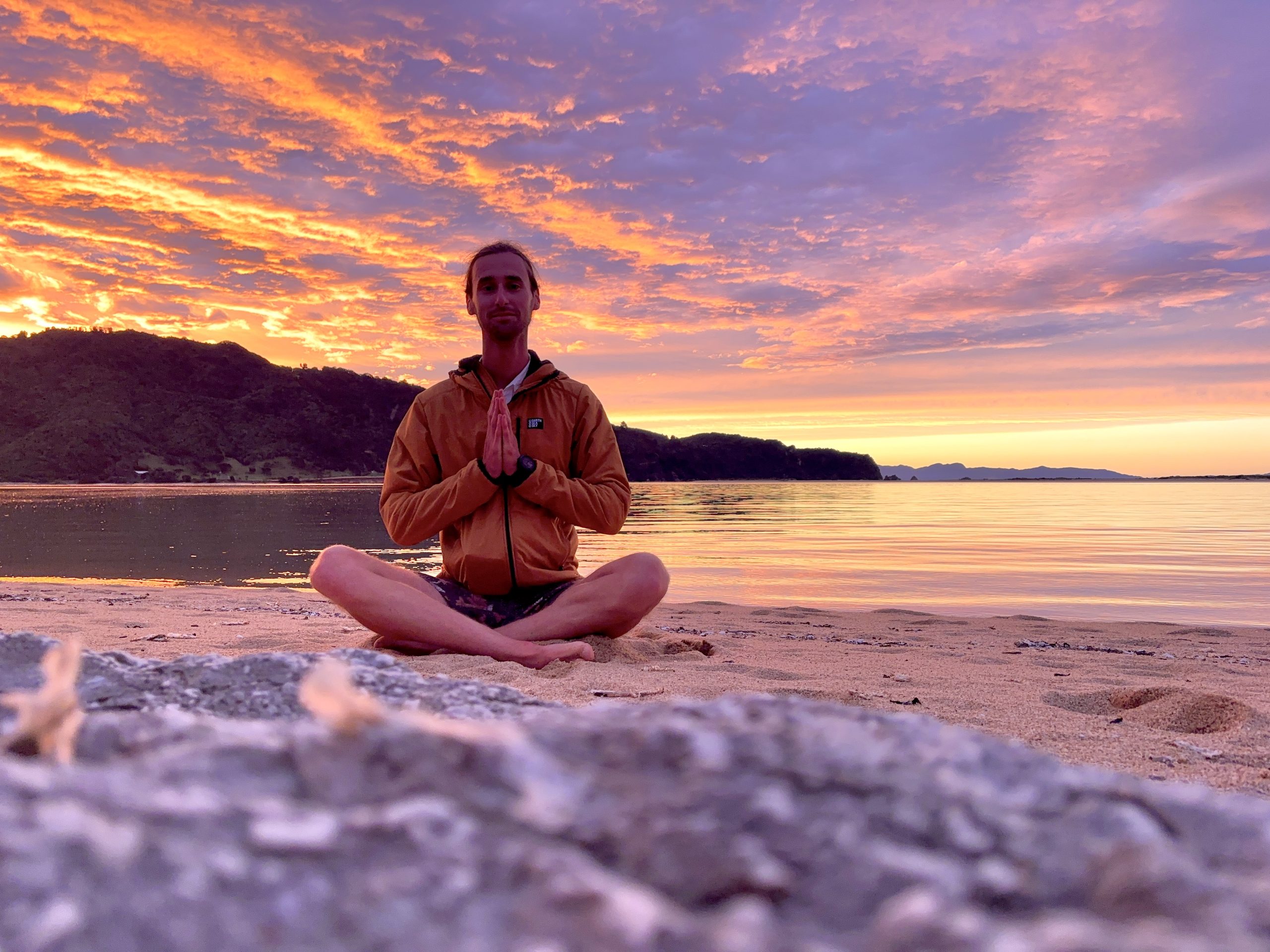
let’s meditate together: book a time below
1:1 Meditation Guidance – 1 hour
Discuss your meditation practice, find ways to work with your current limitations, and get all your questions answered.
85 euros – Online
Reserve your time
Feel a resonance with your goals and my teaching? I’d love to see how I can help you.
open the horizons of tomorrow
Meditation is an integrated experience of mind, body and spirit, where all three are aligned and working harmoniously. But true, deep meditation is not only this. What the yogic traditions call samādhi, or state of being immersed in awareness, is true meditation.
The practice of this kind of meditation is called dhyāna, where we seek these same states of absorption in presence, without any sense of separation or ego: the “I” disappears.
Other meditation practices such as those focused on concentration (called dharāna) aim at sharpening the mind and increasing our ability to concentrate. In the spiritual circles of the 21st century, there are also many guided imagination exercises which are also called “meditation”, but these are a different practice with different aims to true meditation.
Everyone has a different starting point, a different door that helps them enter presence. It’s important to see the pathway, and not to remain stuck with one practice or technique, nor try hundreds of techniques without really mastering any.
Those with a regular meditation practice report higher overall wellbeing, a clearer mind, a greater sense of self, less stress, better relationships, better physical health, more strength and willpower, greater focus, reduced depression and anxiety episodes, and more.
Closed-eye meditation helps people to see better. It’s a bit of a paradox, but when we close our eyes we can look within, and we begin to see the things that we would normally hide or push down, because they are too challenging or confronting. By creating a safe container, we can explore the things that block our evolution, and move past them, to open fresh horizons of tomorrow.
Seeing clearly means our actions are more aligned with our thoughts and beliefs, things fall into place, and we are more fulfilled in our everyday lives.
Let the practice meet you where you’re at. With my help and guidance, meditation can change the way you live your life.
frequently asked questions
What are the pitfalls of meditation that you mention?
Meditation is not a neutral practice: it does not simply lead directly to beautiful states of joy, bliss, love and peace.
Anyone who has tried meditating will know that in the beginning stages, all sorts of thoughts, feelings, and bodily sensations come up to the awareness. This is completely normal – as the mind begins to rest and to stop being stimulated by different external outputs like phones, computers, people, activities…, it begins to process and bring up things that haven’t had the space or time to be treated.
If the mind and body have not at all been purified or detoxed before a regular meditation practice is adopted, then these “toxins” of the mind and the body come up to be dealt with. This is why most people abandon meditation or can never get started with it – it is simply too hard to concentrate, to calm the mind, and to soften the body.
With the right guidance and techniques, as well as the help of the guru-field through shaktipat and Siddha Yoga practice, I guide people into deep and authentic states of meditation. We also address diet and lifestyle of both the mind and the body, as this plays a direct role on your ability to meditate.
Which meditation techniques do you use?
There is no one tried and tested meditation technique that works for everyone.
Depending on the your level and experience (basically, how close to meditative absorption or samadhi you are), will determine which practices we try together to help you evolve your meditative practice.
Each meditation is different, just like each day is different, and we should not be attached to any particular “results” or “experiences” that happen during a meditation so as to seek to reproduce them again the next day. This attachment distracts from the overall path towards the evolution of consciousness.
I propose techniques and practices which draw from Siddha Yoga, Shaiva Tantra (the Vijnana Bhairav Tantra for example), as well as modern psychological “brain hacks” that can help calm the mind and nervous system. I also can recommend mantra, or moving meditation to some people as the best place to start.
Do I have to meditate for a long time every day?
There is no fixed amount of time that you need to meditate each day. Setting a goal with a particular time can help with motivation, challenge, and discipline, which are important parts of the spiritual pathway, especially for the male psychology.
You practice needs to resonate with you and with your schedule. It also needs to help you reach your goals. But if at any point something becomes more important than meditation at the time you set yourself to meditate, it might be time to question what the real priority is.
In short, I help those interested in leading lives of presence, joy and love. Meditation can help you get there.
What do you think about apps to help meditation practice?
Any kind of digital meditation aid is likely going to be helpful for a certain type of person, and only helpful up to a point.
Nothing can replace the internal motivation to meditate, the desire to seek the divine within, the love and joy that are the true nature of your being.
No technology can replace the energetic field created through receiving teachings and meditating with a guru/master/initiated expert. Some special bio-energetic devices can enhance this, but real, embodied, spiritual teachings come through this form.
Meditation apps help you to keep a schedule and help you orient the mind with different ideas, journeys and concentration exercises for dharana practice. This can help calm the mind, find momentary peace, or simply escape from reality. True meditation, dhyana, is simply being in presence, and no application will get you there.
The same is true of all technology in my opinion – it does not and cannot replicate the bio-energetic processes that occur when living beings connect in resonance and share together. Technology is a mind-apparatus, not one for the soul.
We haven't been able to sign you up. Please try again.
Thanks for subscribing!
Jagadānanda
Jagat is the world, ananda is bliss.
The true nature of this world is bliss – divine joy and peace. The free activity of each individual being is the enjoyment of the world.
The bindu symbolises the supreme point of consciousness from which all creation emanates and returns. The spiraling waves are spanda, the vibrant and alive pulsation of consciousness from this one centre.
Member of the Climate Coaching Alliance
Instagram
Linkedin
Facebook
Youtube
Images by Reuben and friends.
Copyright © Jagadānanda 2026